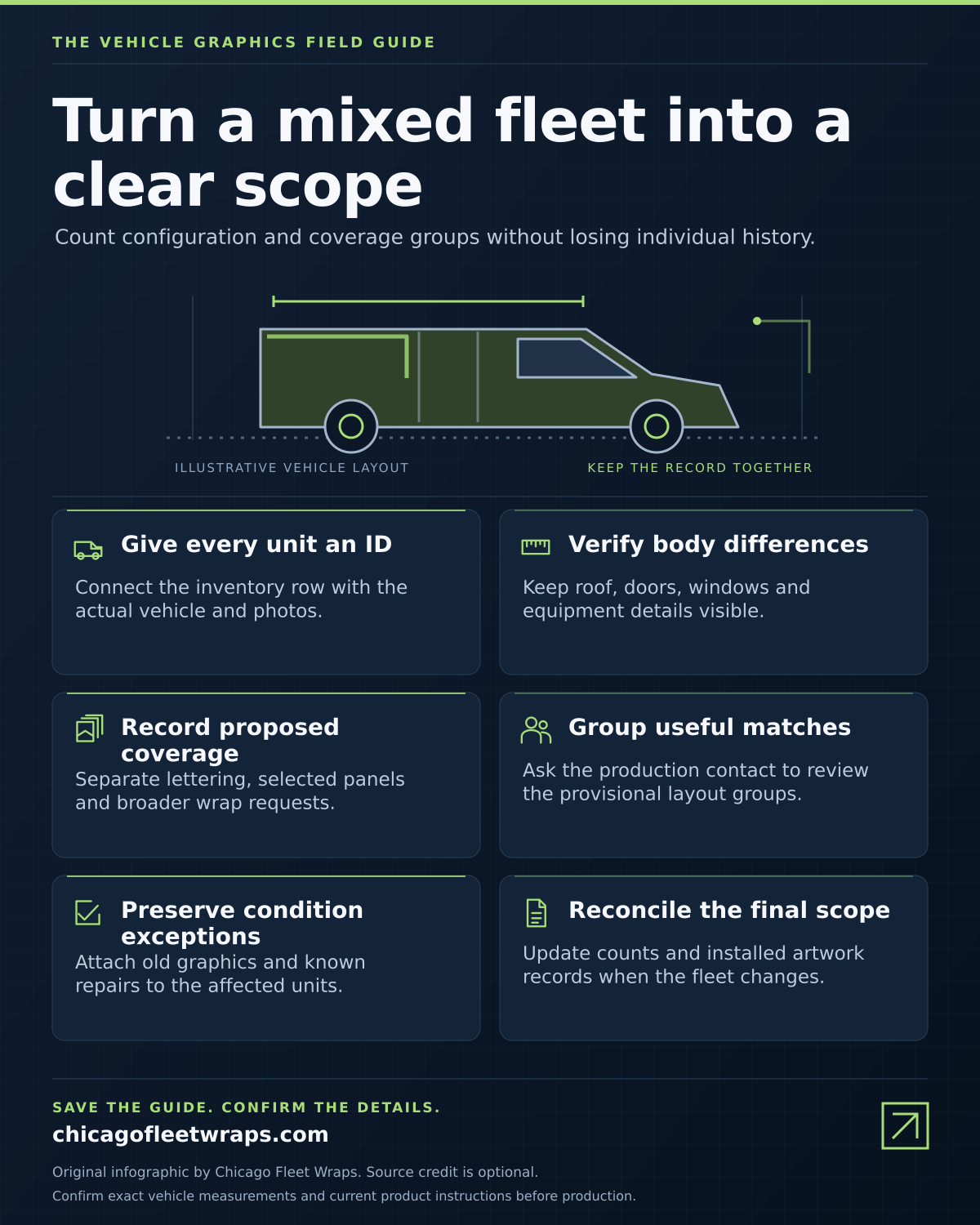
Give every unit an ID
Connect the inventory row with the actual vehicle and photos.
Planning example from Chicago Fleet Wraps
Count configuration and coverage groups without losing individual history.

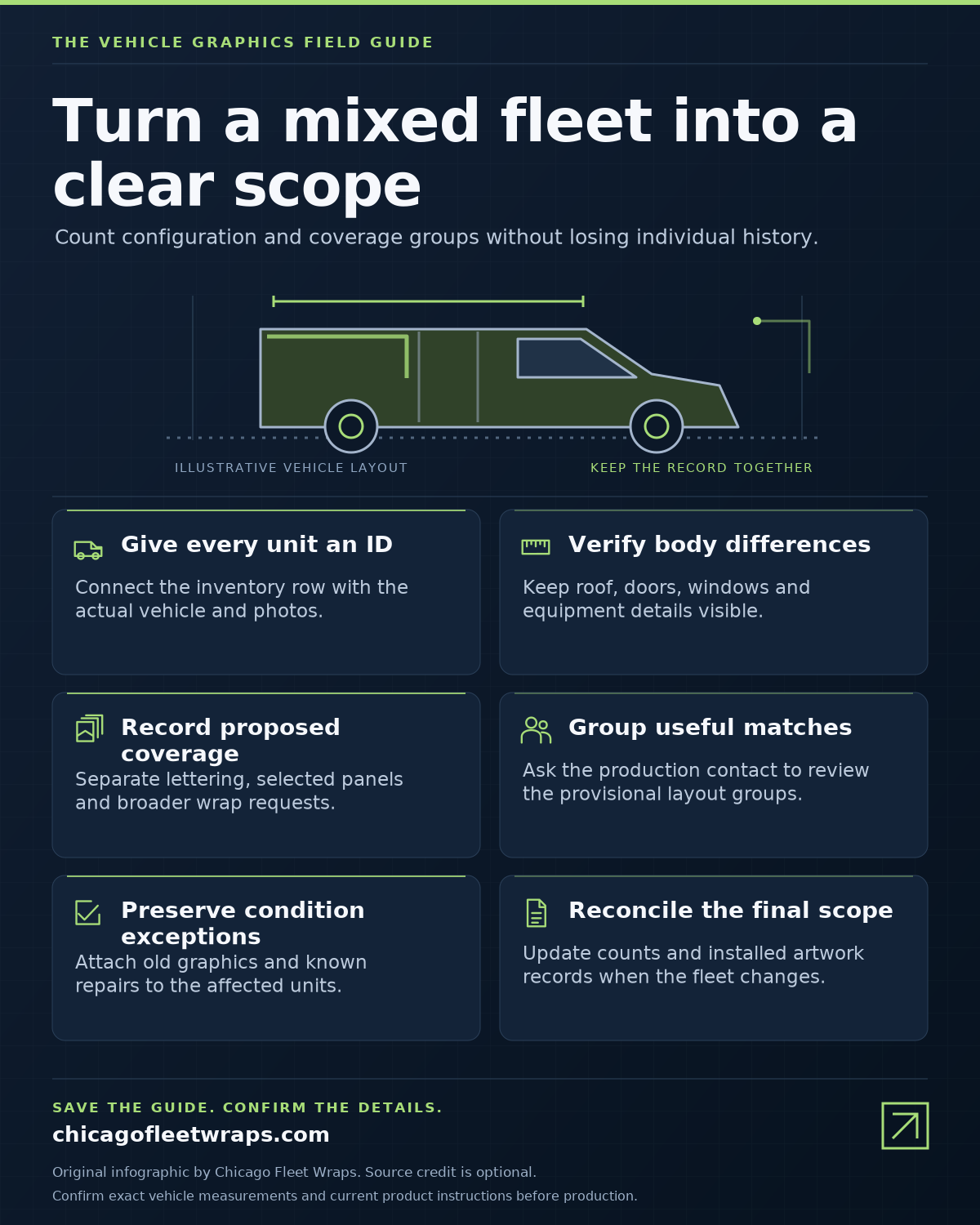
Original infographic from Chicago Fleet Wraps. You may reuse it; attribution is welcome and optional. Confirm project-specific dimensions, materials and instructions before using it for production.
The complete text
Connect the inventory row with the actual vehicle and photos.
Keep roof, doors, windows and equipment details visible.
Separate lettering, selected panels and broader wrap requests.
Ask the production contact to review the provisional layout groups.
Attach old graphics and known repairs to the affected units.
Update counts and installed artwork records when the fleet changes.
Reference the original infographic on the matching Chicago Fleet Wraps page. The resource and CFW share an operator.
Adapt the caption to your article. Using the infographic does not require a backlink.
Practical guide
Group vehicles by verified configuration and coverage rather than assuming one brand means one production layout.
Read the guide: Count layouts before pricing a mixed fleetPractical guide
Decide which differences should disappear and which serve a documented business purpose.
Read the guide: Distinguish brand inconsistency from intentional fleet variationPractical guide
Use individual notes for repairs, old graphics and unknown history without losing the usefulness of grouped planning.
Read the guide: Keep vehicle condition exceptions visible in a mixed-fleet quoteA common approved logo can support the brand standard. Its placement, proportion and production layout still need review for each relevant configuration and coverage group.
Read the detailed guide: Count layouts before pricing a mixed fleet
That is a business decision. Define the intended contact system and document authorized exceptions so artwork does not preserve an outdated number or invent a new branch policy.
Read the detailed guide: Distinguish brand inconsistency from intentional fleet variation
Keep it visible and ask how the supplier wants to handle its assessment and provisional scope. It may remain in the project with a clearly stated condition or be handled separately.
Read the detailed guide: Keep vehicle condition exceptions visible in a mixed-fleet quote
No. It helps the supplier understand the requested layouts and scope. Ask for the actual pricing basis and keep it in the proposal rather than deriving a fee from the group count.
Read the detailed guide: Count layouts before pricing a mixed fleet