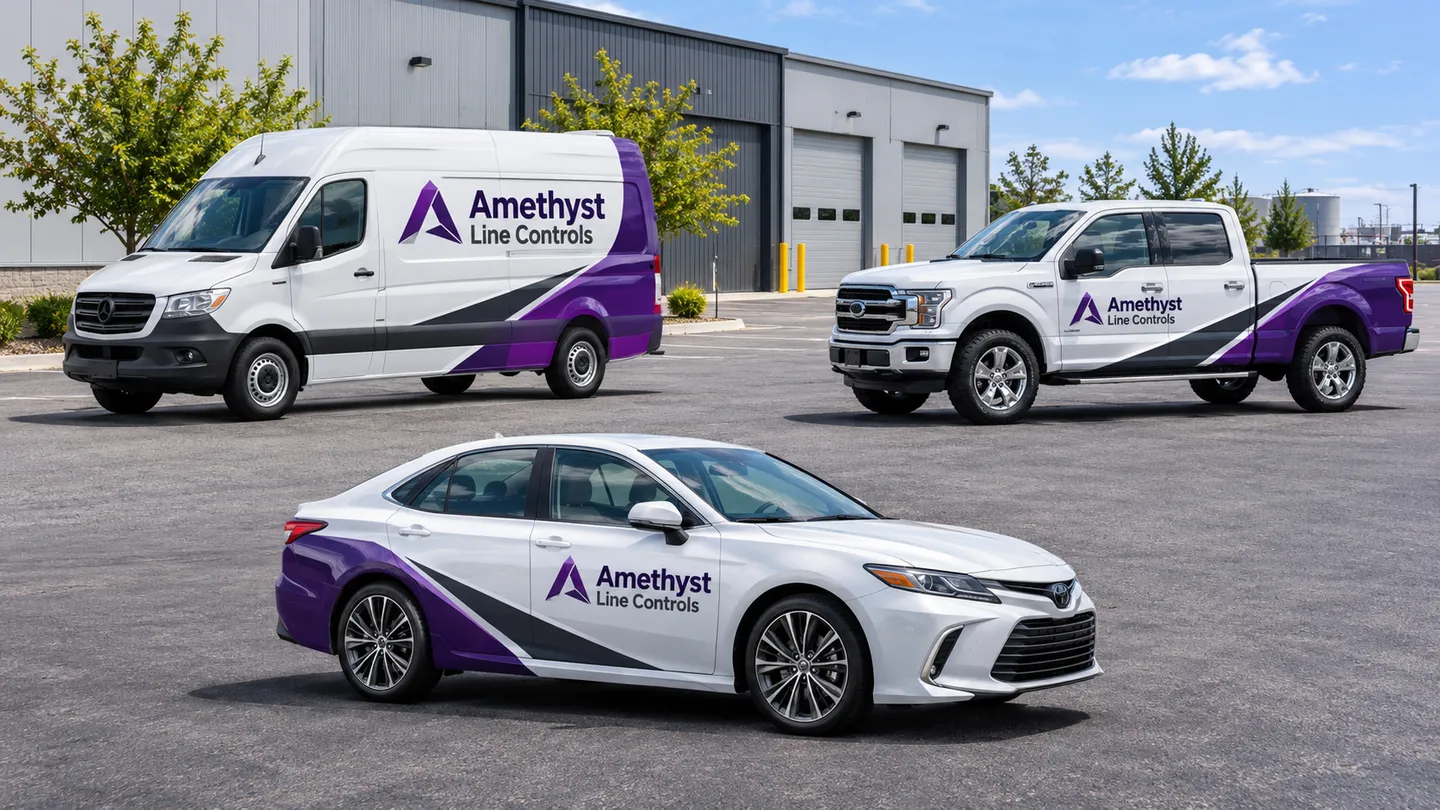
Choose the current authoritative identity
Collect the approved logo, business wording, contact hierarchy and any brand references. Identify who can make the final decision when departments supply conflicting versions. Compare this standard with the vehicles as they exist, using photographs rather than memory. Do not treat the most recently purchased vehicle as automatically correct. The brand owner should confirm what the fleet is intended to represent going forward and which historical material should no longer guide new production.
- List retired identities separately from approved current assets.
- Verify the actual destination of proposed phone or website details.
Explain each meaningful variation
For every difference, record the units affected, the current appearance and the proposed decision. A division label or regional contact route may have a business purpose, while an old slogan may simply be outdated. Give an owner responsibility for resolving the question. Keep body-specific layout differences out of the error list when they are necessary adaptations. The goal is a coherent identity with traceable exceptions, not an assumption that every vehicle must contain identical text and placement.
- Separate intentional wording variation from configuration adaptation.
- Keep undecided exceptions visible before artwork release.
Connect decisions to the rollout record
Map approved changes to the affected vehicle groups and artwork revisions. If the update is phased, record which units still carry the historical identity and why. Avoid presenting an order for new graphics as evidence that every vehicle has already changed. At handoff, retain completion photographs and update the installed-version register. This gives future additions a current standard while preserving enough history to evaluate replacement panels on vehicles that have not yet joined it.
- Record who approved each accepted exception.
- Keep remaining update actions connected to specific units.
Keep a working record
Before you approve the next step
- Current brand owner identified.
- Approved assets selected.
- Vehicle differences photographed.
- Intentional variations explained.
- Pending decisions assigned.
- Installed versions tracked through the rollout.
Use the free planning tool to organize the details you can confirm and the questions still open.
Four questions before the next step
Should every branch use one phone number?
That is a business decision. Define the intended contact system and document authorized exceptions so artwork does not preserve an outdated number or invent a new branch policy.
Read the detailed guide: Distinguish brand inconsistency from intentional fleet variation
Is a different layout a branding error?
Not necessarily. Different bodies and equipment may need different placement. Assess whether the approved identity and message priorities are retained before classifying the variation as a problem.
Read the detailed guide: Distinguish brand inconsistency from intentional fleet variation
Can one logo file be shared across all groups?
A common approved logo can support the brand standard. Its placement, proportion and production layout still need review for each relevant configuration and coverage group.
Read the detailed guide: Count layouts before pricing a mixed fleet
Does the inventory determine the number of design fees?
No. It helps the supplier understand the requested layouts and scope. Ask for the actual pricing basis and keep it in the proposal rather than deriving a fee from the group count.
Read the detailed guide: Count layouts before pricing a mixed fleet
Original technical sources
Use the linked publisher's current instructions for the exact product and vehicle. This planning guide does not replace its application, safety or warranty requirements.